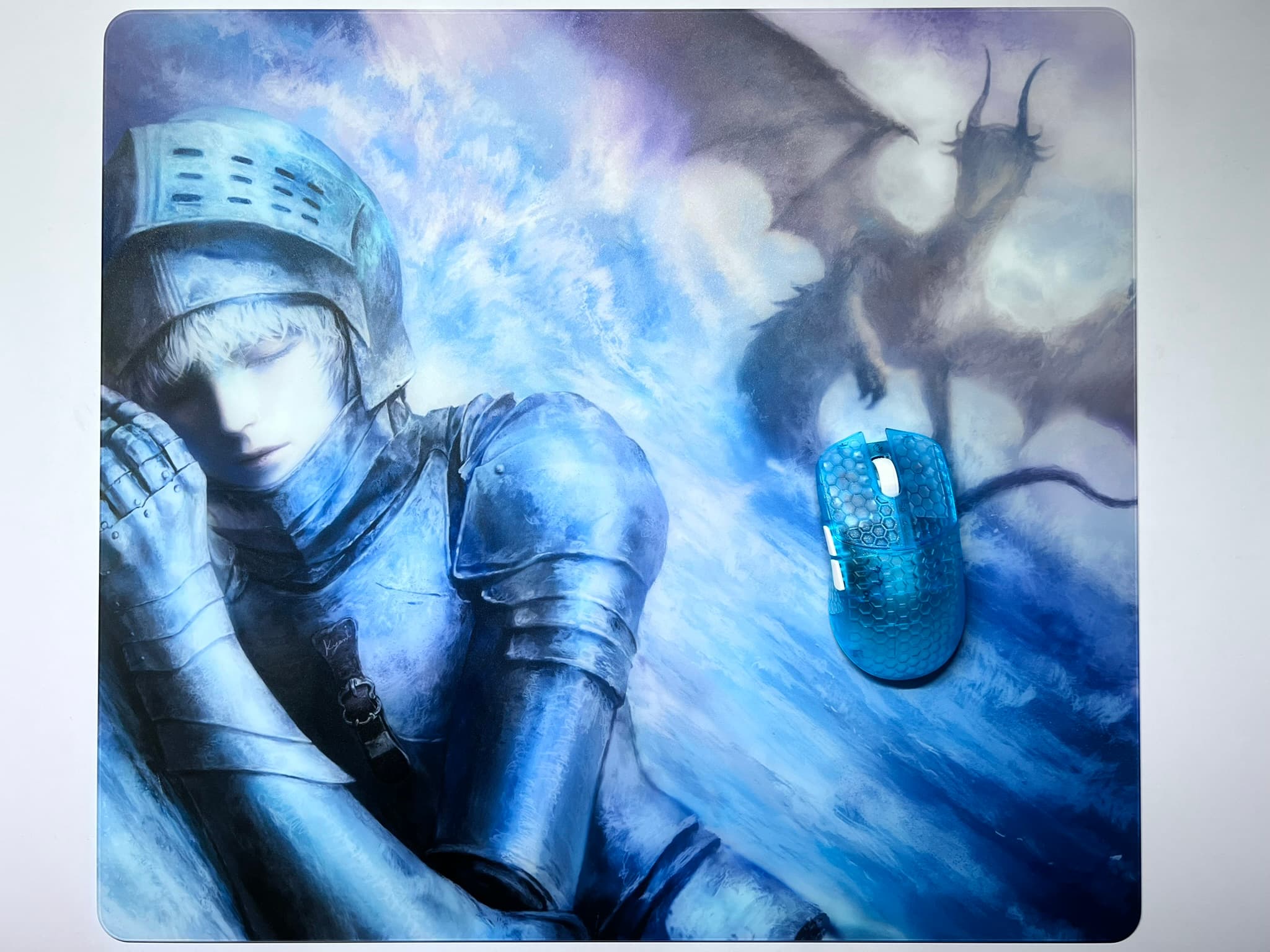
Kyomi Ryo
How did this mousepad end up on my desk? To be completely honest, it shouldn't even be here yet. The minute the Ryo launched, I placed an order from the first batch, fully prepared to wait until June to receive the mousepad. However, just a few days later, I received a shipping notification in my inbox — it turns out, due to a logistical mix-up, a sample intended for an actual reviewer got rerouted straight to me. The owner(s) were awesome here — they jumped in immediately to help me figure out what happened and reassured me that my original pre-order was unaffected. Once that confusion was cleared up, I was just simply ecstatic to be able to try out the pad a full month earlier than expected.
Before breaking down the performance, it might help to lay out how my preferences evolved to this point to give you a baseline for my perspective.
My background
I got into glass pads three years ago starting with the Skypad 3.0, and have slowly expanded my collection over the years.
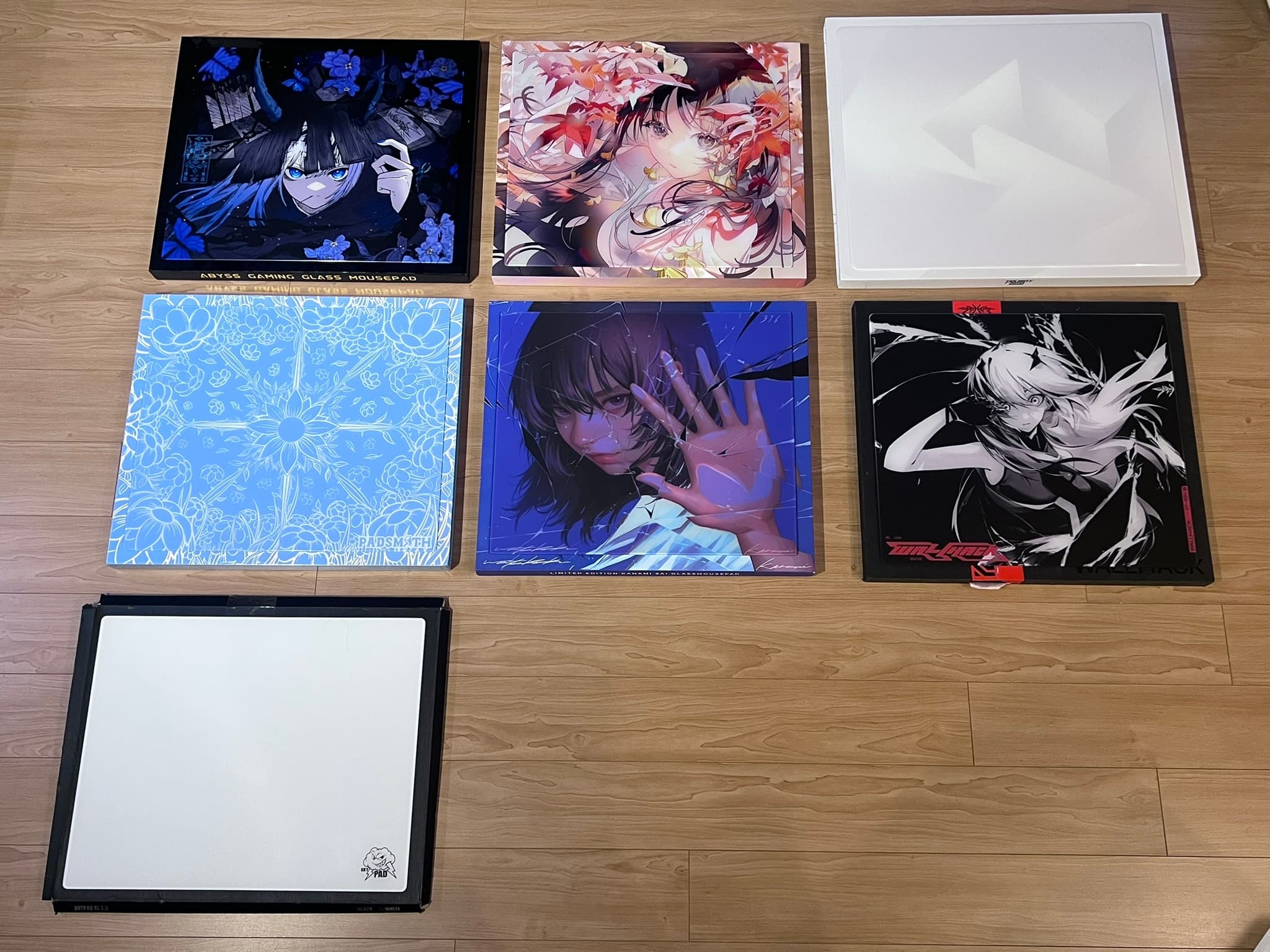
Ironically, my aiming background is primarily in playing tac FPS and Kovaak's — the polar opposite of where glass surfaces are typically recommended. While I still think slower, cloth surfaces are better for tactical shooters, my interest in glass pads simply went beyond caring enough about optimization for my casual play in Valorant.
I started out with the Skypad 3.0, and that was primarily the route I explored — smooth, fast surfaces with minimal texture, where the idea was that with enough raw mouse control you could just move your mouse wherever you wanted it to be.
Texture…?
However, this quickly changed. Smooth surfaces just didn't provide enough control during flicks. I found myself subconsciously avoiding flicks because of a combination of that "floaty" feeling from typical glass surfaces with no slowdown, alongside the complete lack of feedback from smooth glass. I did aim train to try and overcome it, but I soon realized a lot of this came down to fundamental preference, causing my perspective to 180.
I hopped off glass for a bit to try out different surfaces like the Artisan Key83, Raiden, Freefall SVBC+, just to get a feel for what I preferred. Testing those cloth pads is what made me realize I actually valued texture feedback, yet I still missed the glass experience. And so I went back to glass, eventually finding the Padsmith Rosa. The Rosa made me realize I really did prefer having that texture feedback on a hard surface specifically. It felt amazing, but it left me curious about the speed aspect.
Right around that time, I started learning about newer offerings hitting the market from Chinese brands like Abyssgaming and Dysphoria. Their releases introduced me to a very specific profile: extreme speed mixed with heavy texture and push-in slowdown. This niche fits my use case perfectly — the raw speed is simply just plain fun to use, the texture gives me real confidence during larger motions, providing awareness of where my mouse is on the pad, and the push-in slowdown acts as a safety net, helping immensely with large, sudden movements and stops. That realization led me straight to the Abyssgaming Lanyu/Veil, which was my absolute favorite pad before the Kyomi Ryo came out. The Lanyu held that top spot because it leaned heavily into its push-in slowdown, giving me a massive, sudden braking mechanism on a profile that was incredibly fast.
Enter the Ryo
Having the Lanyu as my daily driver meant I went into the Kyomi Ryo with a very specific set of expectations. I wanted to see how it handled that exact same profile of texture, speed, and push down control.
When the pre-production sample landed on my desk, the physical specs were the first thing to parse out:
- Dimensions (500 × 450 mm): A bit larger than your standard 490 × 420 mm footprint. It's a subtle size increase that I appreciate for the extra vertical canvas.
- Edges (3rd Gen Edgeless): Features a premium 2.5D rounding that completely eliminates sharp edges and feels incredible on the wrist.
- Profile (2.2 mm spec / ~2.3 mm on my end): Easily one of the thinnest hard pads in my rotation, right on par with recent low-profile drops from Dysphoria and Abyssgaming.
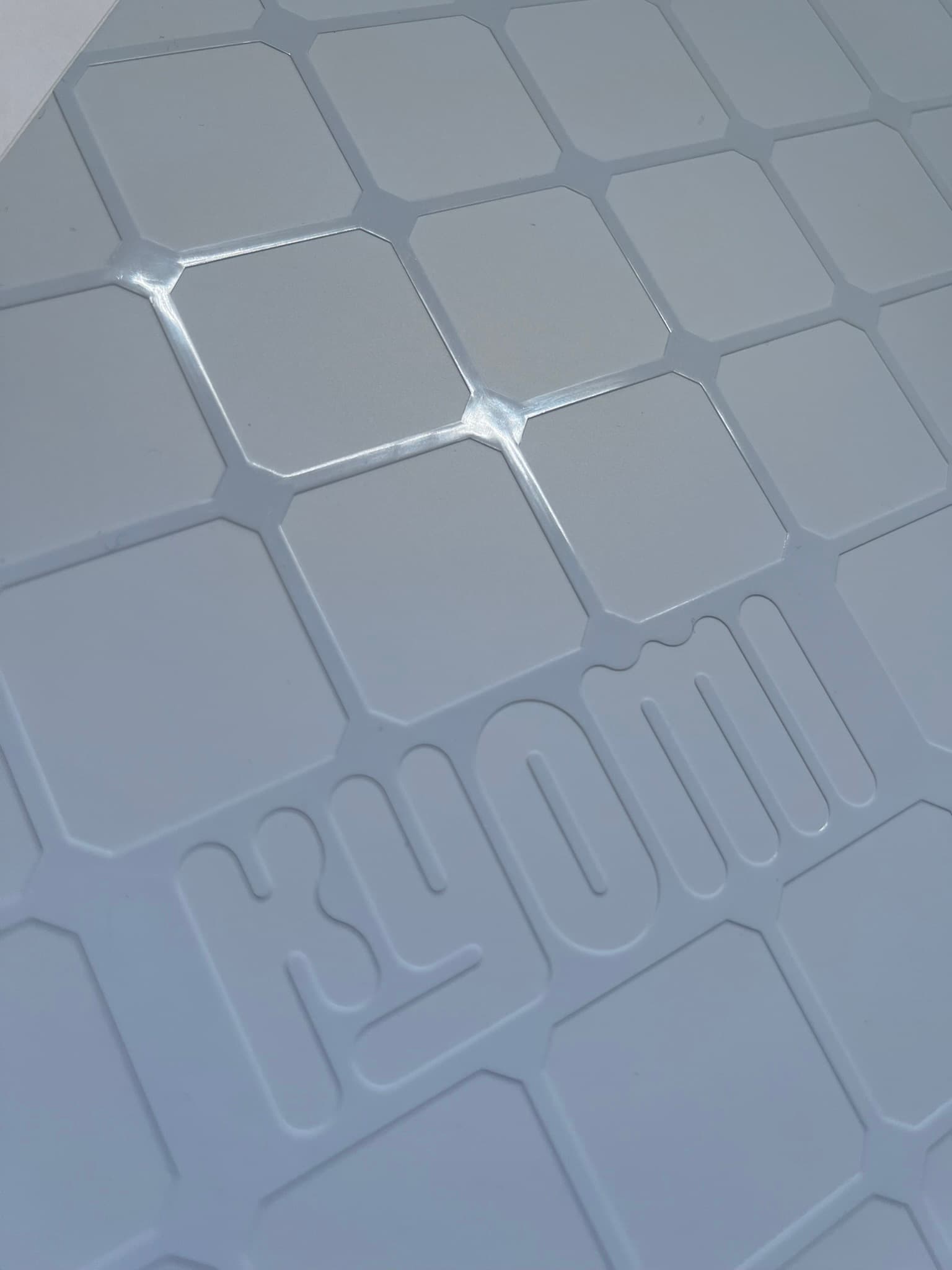
- Base (Custom Silicone Grid): Similar to the Wallhack SP-004 with a grid structure, but the execution here is completely uniform. It lays down completely flat, contrasting sharply with the deeper concave dips in the SP-004's grids.
Note: The retail kit is slated to include a 40-pack of Kyomi Bubble dot skates and other misc accessories, but my copy only arrived with the pad and a microfiber cloth.
Design & Aesthetics
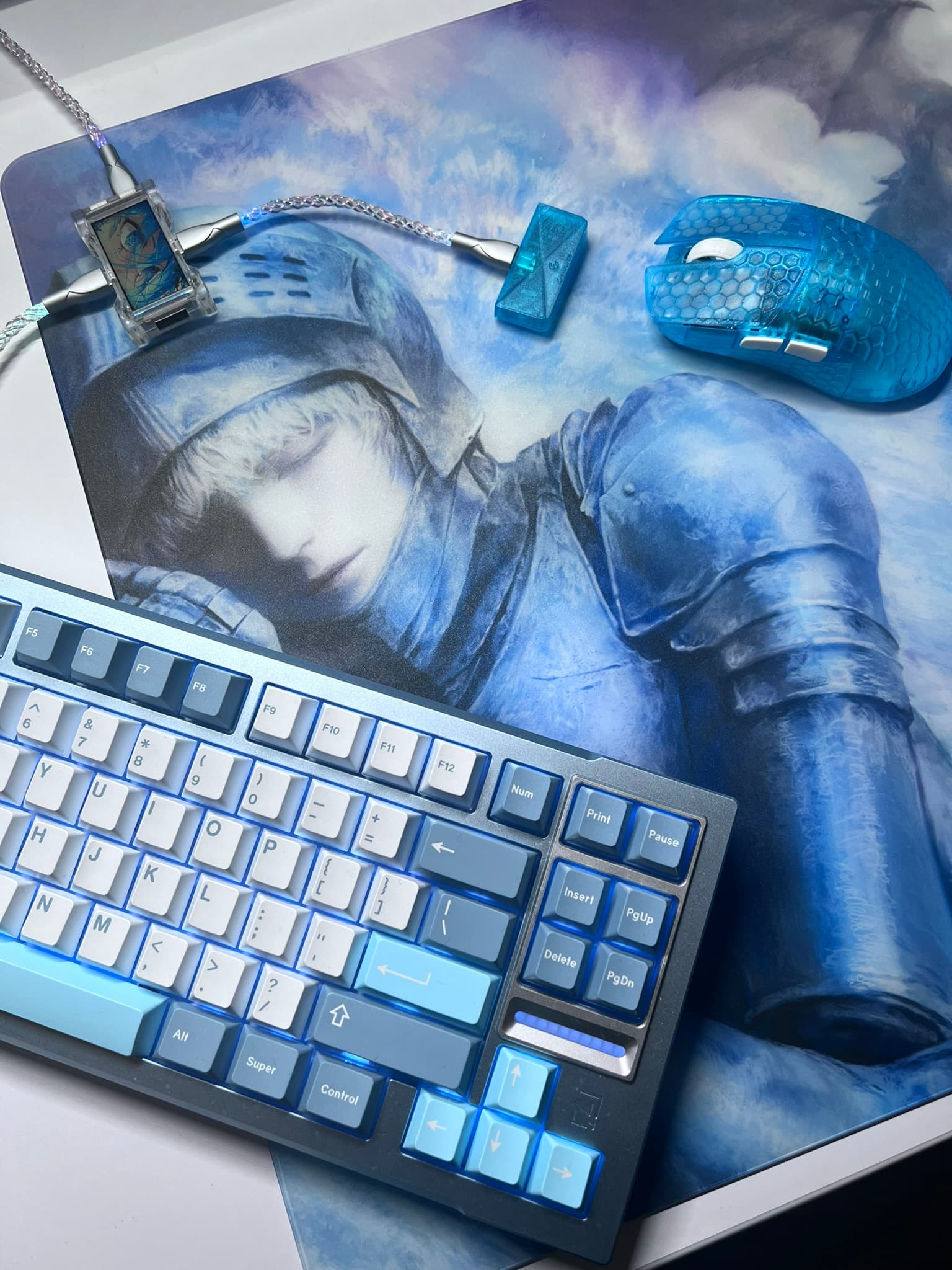
Visually, I absolutely adore the artwork by artist @weweired9. The print features a cold-toned watercolor style utilizing deep blues, silvers, and purples, standing out sharply from the sea of anime-style pads for a much more mature, distinct look. On the desk, it projects an incredibly dreamy, ethereal presence rather than screaming for attention. Unfortunately, I've heard that Kyomi's next release will lean back toward a more mainstream anime aesthetic, which is a bit of a bummer if you're like me and prefer this artistic direction.
Surface Profile
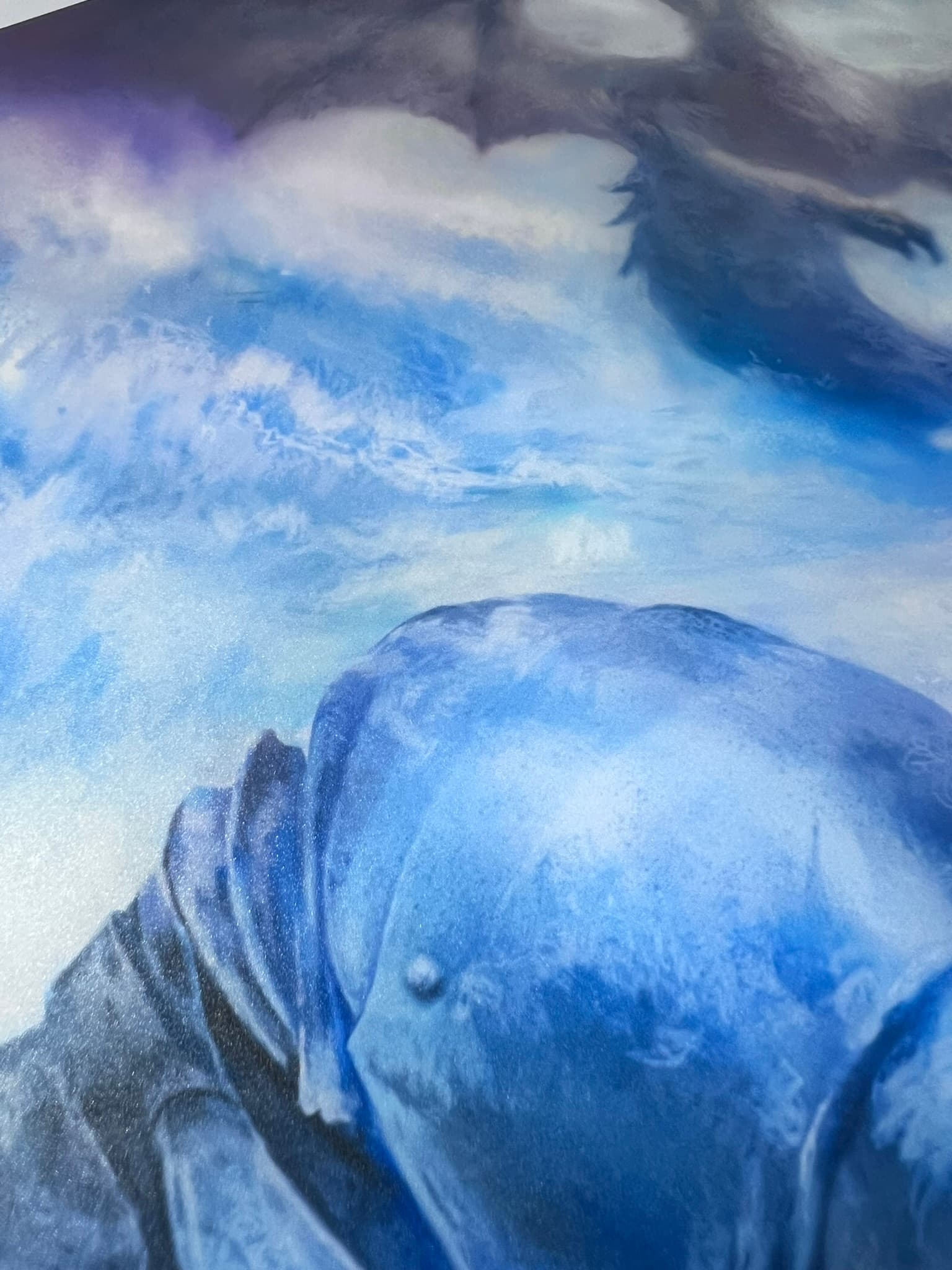
The Ryo features a very dry, heavily textured surface profile. It has a pronounced physical grain that you can easily feel under your fingertips and audibly hear when moving across it.
Moisture & Skin Stick
With completely dry skin, the surface performs decently. Unfortunately, the moment even a small amount of moisture or sweat is introduced, the texture becomes incredibly grabby. While this won't matter to the vast majority of the community who already use arm sleeves on glass, it's a definitive buyer-beware if you are one of those rare people who prefer playing sleeveless.
Performance
But once you throw a sleeve on and actually start playing, how does it perform compared to something like the Lanyu?
What I found is that while the Ryo and the Lanyu occupy a similar niche, they tilt the scales differently: the Ryo turns the overall speed profile up a notch and trades away that immediate, aggressive push-in stop for a more progressive, tasteful deceleration.
- Static Friction: Low. It's noticeably faster than the Lanyu and sits on par with the pure speed of the Special Gear Autumn Whispers.
- Dynamic Friction: Low but less floaty, due to the deceleration from pushing in.
- Push-in: Applying downward pressure engages a distinct slowing mechanic. Crucially, it yields a smoother, more progressive deceleration rather than the instant stop characteristic of the Lanyu.
Feedback
Stepping away from the direct head-to-head comparisons, the everyday experience of aiming on the Ryo changes drastically based on the scale of your movements.
Large Motions
During larger sweeping motions, the physical grain of the surface provides heavy, highly tactile feedback directly through your mouse skates. I love this because the pad essentially feeds information back to your hand, giving you a sharp spatial awareness of exactly where your crosshair is during wide flicks. Applying pressure toward the end of those flicks gives you a tasteful amount of mechanical control to smoothly decelerate right where you want to land.
This avoids the stop-start, disconnected feel that you get from a pad like the Lanyu when trying to fluidly chain movements together. Because the Lanyu forces such an abrupt, hard stop, you lose all your momentum, making it clunky to start a new motion again from a dead halt. With the Ryo, since the deceleration is progressive, it's incredibly easy to pick that motion back up or redirect it mid-glide before the mouse comes to a complete stop. It makes chaining movements feel fluid and connected.
Micro-Adjustments
Conversely, smaller micro-movements quiet down that physical texture significantly. When you aren't actively digging into the surface for a massive stop, fine micro-corrections transition into a much cleaner, precise feel.
The exact behavior here is more or less determined by your skate choice. Skates that reduce the overall feedback from the texture give you a smoother feel during micros, whereas options that emphasize the grain dig straight into the pad to preserve that raw, tactile feedback.
Skates
Note: A lot of skates start out incredibly rough because of the Ryo's texture, but they smooth out once broken in, so keep in mind first impressions may not fully reflect the whole experience.
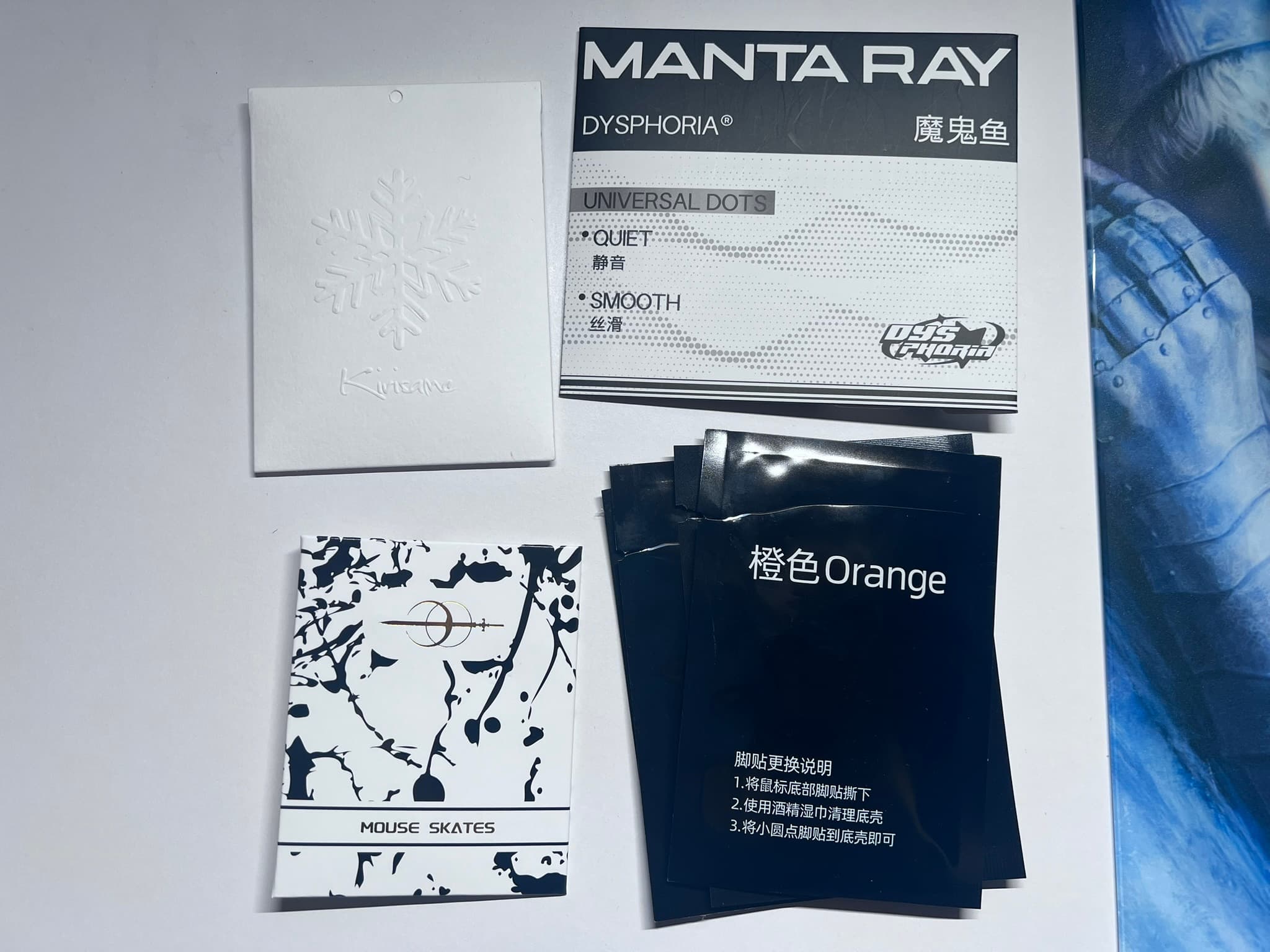
- Westlab Offerings (Orange, Black, Blue, Creams): I spent most of my time testing with the Oranges, and they were easily the smoothest option out of the bunch. They feature a very fast static and dynamic profile (admittedly felt unwieldy at times) but offer a great balance: larger flicks still retain a more muted texture feedback, while smaller micro-adjustments become quite smooth. The other Westlab variations all felt solid as well, offering slightly different speed profiles depending on your preference.
- Dynamic Manta Rays: Low static and medium-low dynamic friction. They don't completely smooth out the texture but give off a lower frequency feel under your hand (if this makes any sense). They also feel a bit more stop-starty being more sensitive to push in.
- Abyssgaming Bingtou: Very similar friction profile to the Manta Rays, but with less feedback and a bit faster speed.
Final Thoughts
Ultimately, transitioning from the Lanyu to the Ryo forced an adjustment in how I approach my shots. Because of the noticeable step up in raw speed, as well as the shift from a sharp stop to a more extended slowdown from push in, I had to spend time consciously softening up my flicks, learning to rely on a smoother deceleration rather than the instant hard stops I was used to.
The braking mechanics are really just one piece of what makes this pad work though — it stands out because of how cohesive the entire package is. The Ryo is a very fast, heavily textured surface that delivers incredible tactile feedback. That performance is matched by a premium build and an amazing looking watercolor style print.
Moving forward, I'll be keeping an eye on how the coating holds up over time and how the final mass-production units perform compared to this sample, but if the specific performance profile I've described here sounds like your cup of tea, I really don't think you'd be disappointed. It's a specialized and incredibly well-executed hard pad that I find entirely worth it.